
For many municipal utilities, the path to expanded or improved sewer service is
complicated by the same set of obstacles: tight capital budgets, difficult terrain,
aging infrastructure, and constituents who need service but whose density doesn't
justify the cost of conventional gravity sewer.
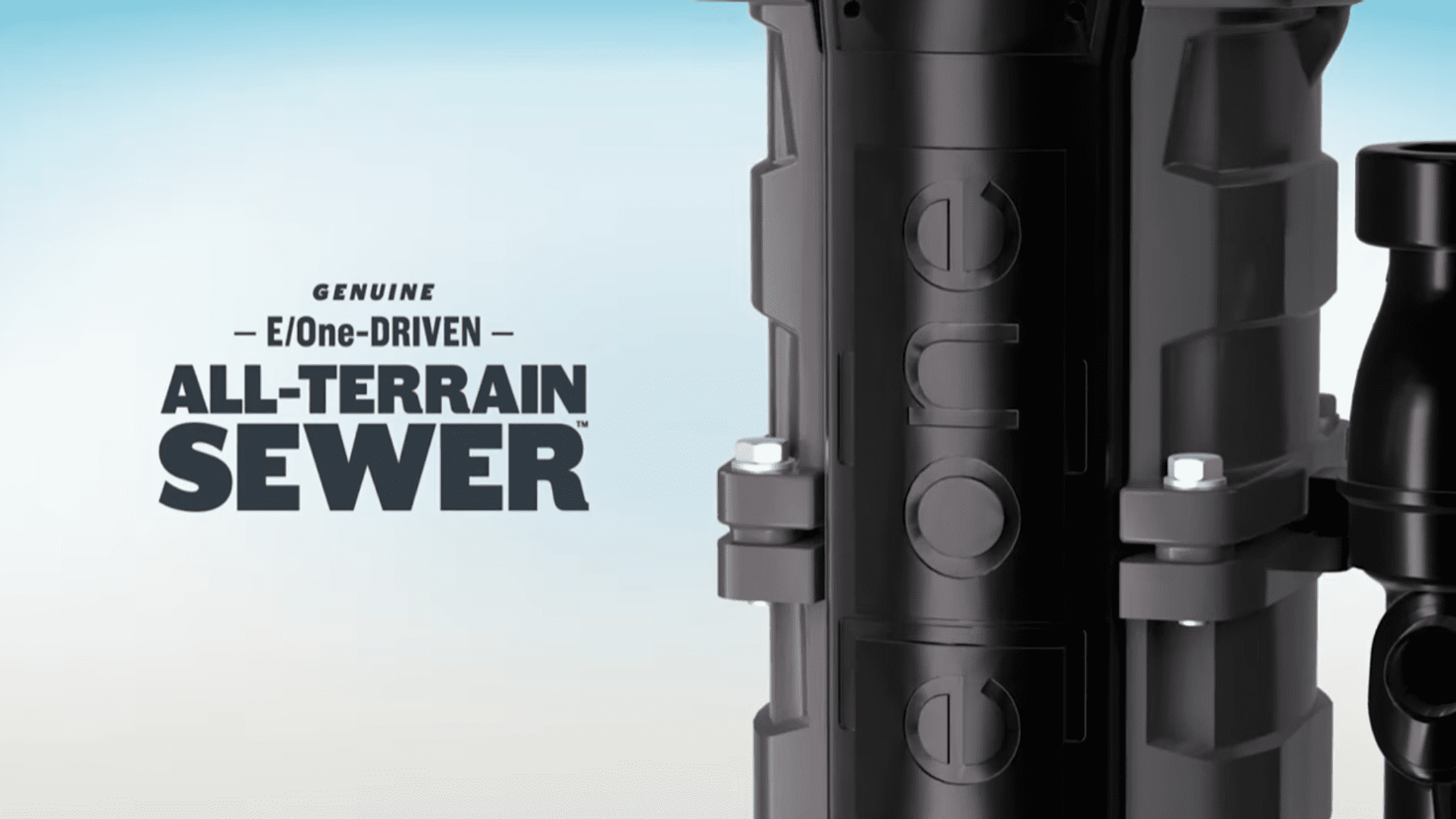
E/One grinder pump systems have become a go-to solution for municipalities
navigating exactly this kind of challenge. Here's what public works directors,
utility managers, and local government engineers need to understand about how
E/One systems work — and where they make the most sense.
The Septic-to-Sewer Problem
Across the country, lakefront communities, rural neighborhoods, and older
subdivisions are grappling with failing or inadequate septic systems. The
consequences are significant: groundwater contamination, surface water
degradation, public health concerns, and increasing regulatory pressure from
state environmental agencies.
The obvious solution — connecting these properties to central sewer — is often
blocked by the economics of gravity sewer infrastructure. Installing large-
diameter gravity mains, multiple lift stations, and the associated civil work
to serve a scattered, low-density population can easily run $30,000 to $60,000
or more per connection in difficult terrain. For a utility serving 200 homes
across a lakefront community, that math often doesn't work.
E/One's pressure sewer approach changes the math. Because each home's grinder
pump station does the work of moving wastewater under pressure through small-
diameter force mains, the shared infrastructure cost drops dramatically. In
many septic-to-sewer conversion projects, E/One systems have been installed at
costs that make the project financially viable where gravity sewer would not have
been.
Martin County, Florida: A Recent Example
E/One's case study from Martin County, Florida illustrates the septic-to-sewer
model well. Martin County Utilities undertook a large-scale program to convert
septic systems to central sewer service in order to protect the Indian River
Lagoon and other local waterways from nutrient pollution. The county's program
connected thousands of homes using E/One pressure sewer technology, delivering
environmental protection at a cost that was feasible within the utility's
capital program.
This is increasingly the model that state environmental regulators are pushing
for in Florida and other coastal states — connect the septic systems to central
sewer, and do it before the water quality damage becomes irreversible.
Maintaining an E/One System at Scale
One of the operational realities of a municipal E/One pressure sewer system is
that the utility is taking on responsibility for individual pump stations at each
property — a very different maintenance model than gravity sewer or large lift
station management.
E/One has built a support ecosystem to help municipalities manage this:
- Alarm panels (Basic, Protect, Protect Plus, and T260 series) give operators real-time visibility into pump station status and alarms at the individual station level.
- Remote Sentry and Sentry Advisor provide remote monitoring capability so crews can prioritize service calls before a backup occurs.
- Certified Service programs ensure that maintenance technicians are properly trained on E/One equipment.
- Replacement pumps and parts are available through distributors like Haynes Equipment, supporting rapid response when a station needs service. For utilities managing hundreds or thousands of E/One stations, the alarm panel and remote monitoring infrastructure is as important as the pump itself. We recommend asking about the full monitoring solution early in the project design process.
Financing and Grant Considerations
Municipal E/One projects are regularly funded through a combination of state
revolving funds (SRF), USDA Rural Development loans and grants, EPA Water
Infrastructure Finance and Innovation Act (WIFIA) funding, and CDBG grants
through HUD. The environmental benefits of septic-to-sewer conversion — reduced
nutrient loading to waterways, protection of drinking water sources — often make
these projects competitive for grant funding.
E/One's website includes resources specifically tailored to the municipal market,
including design software (E/One Design Assistant) and access to their engineering
team for system design review and analysis.
How Haynes Equipment Supports Municipal E/One Projects
Haynes Equipment is an authorized E/One distributor with experience supporting
municipal wastewater utilities. We can assist with product selection, system
configuration, parts sourcing, and service support for ongoing municipal
maintenance programs.
If your utility is evaluating E/One pressure sewer for a septic-to-sewer
conversion, system expansion, or gravity sewer replacement project, we'd be
glad to be a resource. Contact us to start the conversation.