
If you're a developer, one of the most expensive and frustrating constraints on
a project can be the question of how to handle sewer. Gravity sewer is the
default assumption — but gravity sewer has hard limits, and those limits have a
way of turning otherwise viable parcels into engineering headaches.
Terrain that drops away from the road. A site that's 3,000 feet from the nearest
sewer connection point. Coastal land that's essentially flat with a water table
two feet below grade. Rocky hillside lots where deep trenching costs more than
the lot is worth. Historic neighborhood infill where open trenching would destroy
the streetscape.
These are exactly the scenarios where E/One grinder pump systems have been
enabling development for decades — and why developers who know about ALL-TERRAIN
SEWER® treat it as a legitimate tool in their infrastructure planning toolkit.
How E/One Systems Unlock Difficult Sites
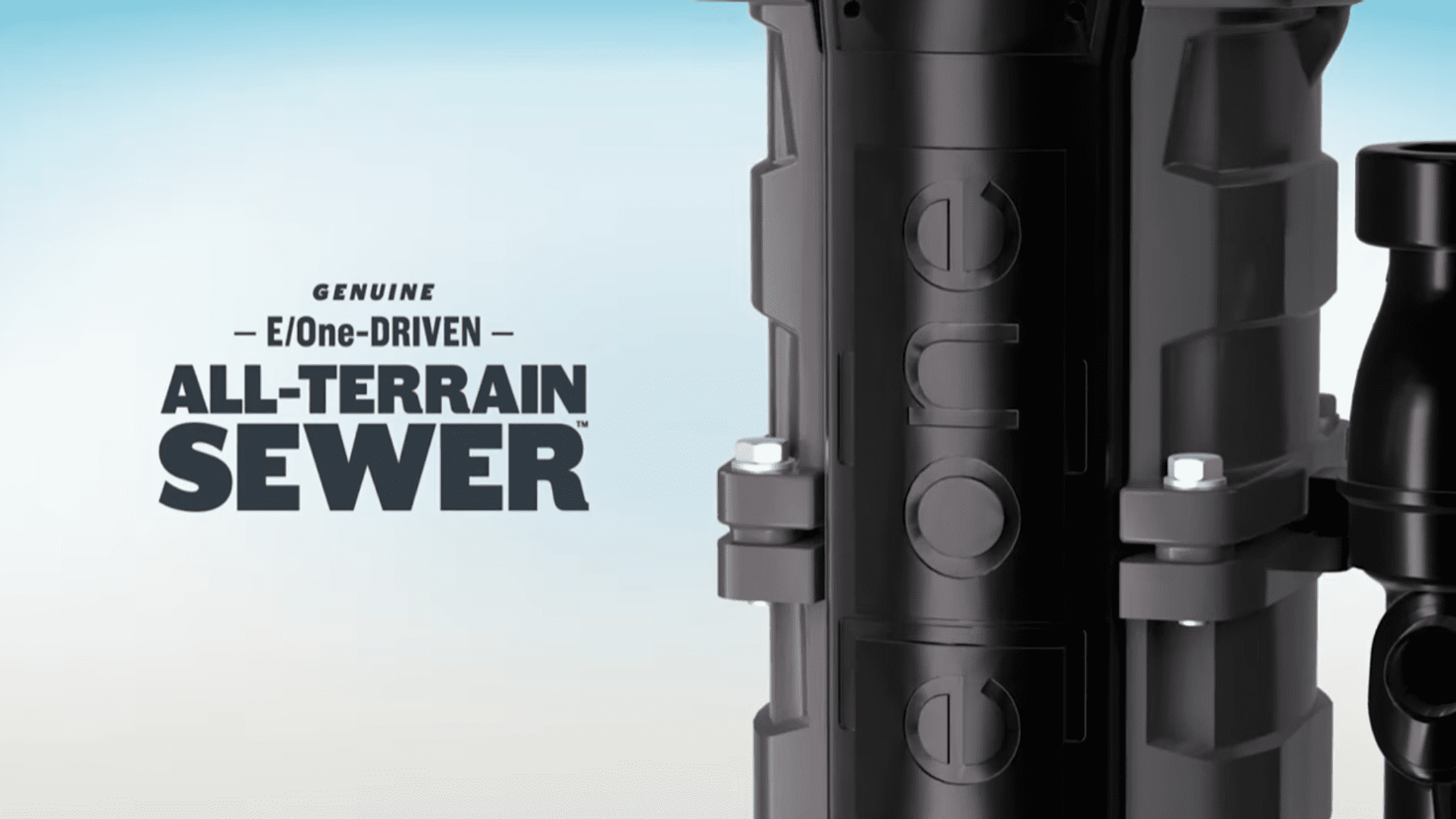
The E/One pressure sewer approach installs an individual grinder pump station at
(or near) each structure. That station collects waste from the building, grinds
solids, and pumps a fine slurry under pressure through a small service lateral
to a shared pressure main.
For a developer, this changes the equation in several important ways:
Elevation flexibility. Pressure mains don't need to run downhill. A
development on a hillside can have a pressure main that runs uphill to the street,
or follows the most economical path through the site regardless of grade.
Small pipe, shallow trench. Pressure mains are typically 2" to 4" diameter
— dramatically smaller than gravity mains — and can be buried at shallower
depths. In a residential development, this translates directly to lower civil
infrastructure cost.
Fewer lift stations. Because each lot's pump station is already doing the
work of lifting and pressurizing the waste stream, community-scale lift stations
are often unnecessary. On a project where gravity sewer would have required two
or three lift stations, E/One may eliminate them entirely.
Small-footprint pump stations. E/One's tanks are compact enough to be
installed in a standard residential yard, out of the way of driveways and
landscaping. The E/One Rock decorative cover is available for clients who want
the station to blend into the landscape.
Faster permitting and construction. Smaller infrastructure, less disruption
to existing utilities and pavement, and simpler civil work can translate to faster
permitting and construction timelines.
Project Types Where E/One Is a Strong Fit
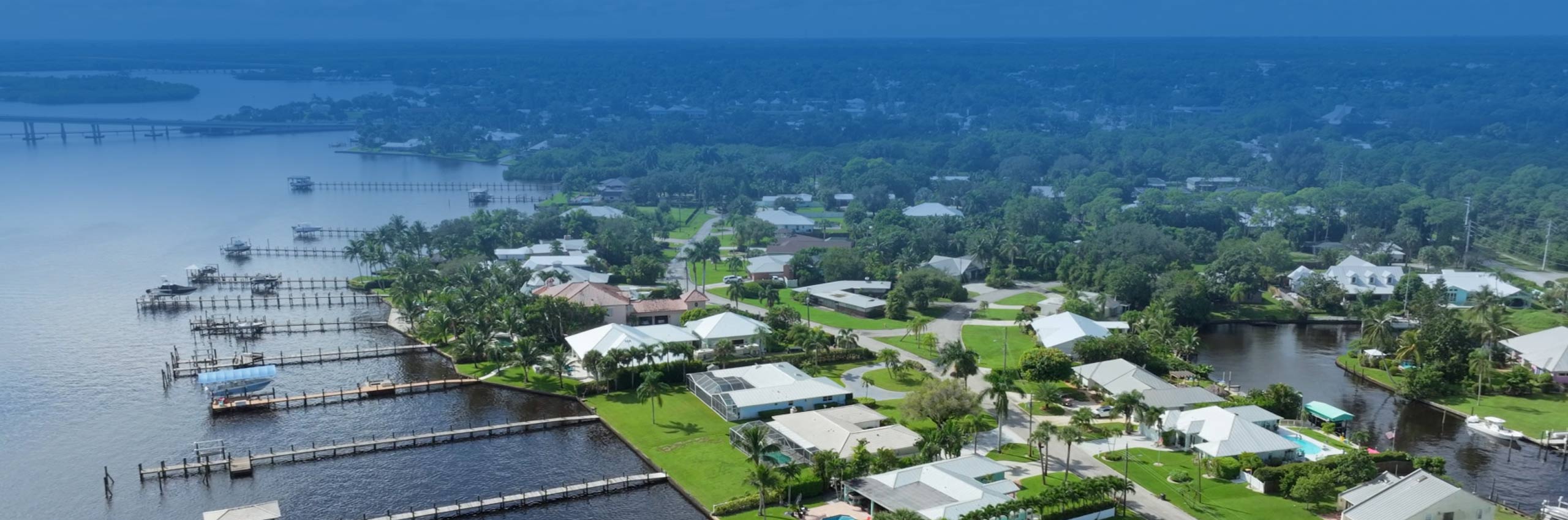
- Lakefront and waterfront residential development — sensitive shoreline habitat, high water tables, and rocky substrate make gravity sewer difficult and expensive. E/One systems are standard in this application.
- Rural residential subdivisions — low lot density means gravity sewer economics rarely work. E/One's per-connection cost advantage is most dramatic in this setting.
- Resort and amenity communities — developments like Promontory in Park City, Utah and Reynolds Lake Oconee in Georgia have used E/One systems to deliver central sewer service to high-end communities on challenging terrain.
- Marina and commercial waterfront — E/One offers commercial and light industrial capacity in their W-Series and D-Series configurations.
- Infill and redevelopment — urban and suburban infill sites often lack access to adequate gravity sewer capacity. A small E/One system can provide sewer service without a major main extension.
What the Utility Authority Needs to Know
One common question from developers is how the local utility will receive an
E/One pressure sewer system. In many markets, local utilities already have
experience with E/One and have established maintenance and monitoring programs.
In others, the developer may need to facilitate a conversation between E/One's
engineering team and the utility before the system design is finalized.
E/One's Design Center offers free system analysis and design assistance, which
can be valuable in early-stage discussions with local utility authorities. Their
Design Assistant software allows engineers to model system performance and
demonstrate compliance with utility requirements.
Haynes Equipment: E/One Support for Developers
Haynes Equipment works with developers, their engineers, and contractors across
our region to supply and support E/One grinder pump systems. We can help with
early-stage product and application questions, coordinate with E/One's engineering
resources, supply equipment for the project, and provide service support after
the development is turned over to homeowners or a utility authority.
If you're evaluating E/One for a development project, let's talk. We're set up
to support you from concept through construction.